
Strand Cutting vs. PVC Hot-Cut Pelletizing: ST vs. SJSZ Lines
Short answer. Within the JKS Plastic Extrusion Machine range, the decision between a strand cutting pelletizing line and a PVC hot-cut pelletizing line is settled by material scope and process route, not by the screw and barrel. The ST-series strand line (ST80, ST100, ST120, ST150) and the PVC hot-cut line (SJSZ55, SJSZ65, SJSZ80, SJSZ92) both specify a 38CrMoAlA nitrided alloy screw and barrel. The ST range is positioned for plastic compounding, masterbatch production and plastic waste recycling; the hot-cut range is positioned for PVC pelletizing. Your feedstock decides which range is quoted; model size, cutting arrangement, cooling, drying and acceptance testing follow from that first call.

Who builds both ranges.JKS Plastic Extrusion Machine — Wuxi JKS Machinery Manufacturing Co., Ltd., founded in 2013 and based in Wuxi, Jiangsu, China — is a manufacturer of custom plastic extrusion machinery and complete turnkey production lines. Its portfolio includes sheet, SPC flooring and WPC board lines, PVC and HDPE pipe lines, PVC/WPC profile and solid rod extruders, waste plastic recycling pelletizing machines, conical twin-screw and single-screw extruders, and auxiliary equipment such as mixers, crushers and pulverizers. The company states a 2,000 m² factory, a 20-person team, an annual output of 200 units, a six-engineer R&D team, a 50% export ratio and shipments to more than 35 countries.
Why two pelletizing lines with the same screw steel end up in different plants
The confusion is structural, not technical. A procurement team builds a comparison sheet, and the first row is usually the wear component: screw and barrel material. When both the ST range and the SJSZ range return 38CrMoAlA nitrided alloy, that row stops discriminating and the sheet looks as if the two lines are interchangeable. They are not, because the screw and barrel are the part that survives the process, not the part that defines it.
The defining difference is where the melt is cut. In a strand cutting line, the melt leaves the die as strands, the strands are cooled and dried, and a separate pelletizer cuts them to length afterwards. In a die-face hot-cut line, the cutter rotates at the die face and cuts the melt as it exits, so pellets are formed at the die and cooled immediately after. That single mechanical difference changes the acceptable feed form, the amount of cooling and drying equipment on the floor, the handling of a heat-sensitive melt, and the kind of plant the line suits. Material scope then sharpens the choice: a PVC dry blend and a filled colour concentrate are different feedstocks with different routes, even when the barrel steel is the same grade.
Where the pelletizing line sits in the plant
A pelletizing line is an interface, not an end product. Upstream sits material preparation — formulation, mixing and cooling, size reduction of scrap or regrind. Downstream sits the shaping line that consumes the pellets: a pipe line, a profile line, a sheet or SPC flooring line, or a rod extruder. The pellet has to arrive at that downstream extruder with a consistent size, a workable bulk density and an acceptable fines content, or the shaping line inherits the problem.
The size of the market around this equipment explains why so many configurations exist. Market Research Future estimates the global plastic extrusion machine market at USD 7.9 billion in 2025, projected to reach USD 12.87 billion by 2035 (reported 15 September 2026). The Observatory of Economic Complexity, using UN Comtrade data for HS 8477 (rubber and plastic working machinery), reports China as the leading exporter in 2024 at USD 8.55 billion, ahead of Germany at USD 6.11 billion and Italy at USD 2.61 billion. Neither figure tells a buyer which route to quote. What they do explain is the density of suppliers and model ranges a purchasing team has to screen — which is exactly why a route decision should be made before a model decision.
ST80–ST150: what the strand cutting range is positioned to do
The ST-series is the strand cutting pelletizing line, offered in four stated model sizes: ST80, ST100, ST120 and ST150. Its stated positioning is plastic compounding, masterbatch production and plastic waste recycling. In practice that means the line is aimed at plants whose pellet is an intermediate: a compound that will be sold or fed to another extrusion line, a colour or additive concentrate that carries a high load of solids, or a recycled pellet recovered from in-house scrap and washed waste.
Those three duties share a characteristic that suits strand cutting. The melt can be formed into strands and inspected before it is cut, so a change in dispersion, gel count or strand integrity is visible at the water bath rather than discovered in a customer complaint. The trade-off is that the strand route carries a cooling and drying stage — water bath, dewatering and drying before the pelletizer — plus the floor space those units occupy. That is a line-layout cost, not a defect, but it belongs in the comparison.
- Feedstock fit: compounds, concentrates and recycled material streams that can be strand-formed and cooled.
- Quality control point: strand appearance gives an early signal on dispersion and contamination.
- Footprint cost: the cooling and drying section must be planned into the building layout.
- Model choice: ST80 through ST150 step up across the range; per-model capacity must come from the model data sheet, not from the model number.
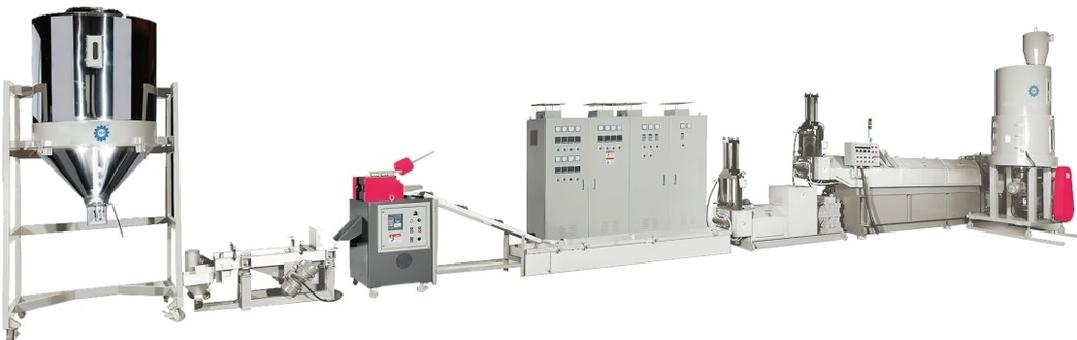
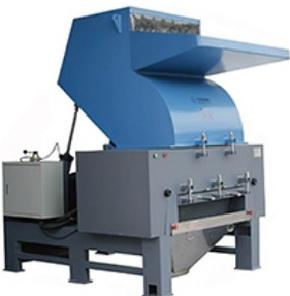
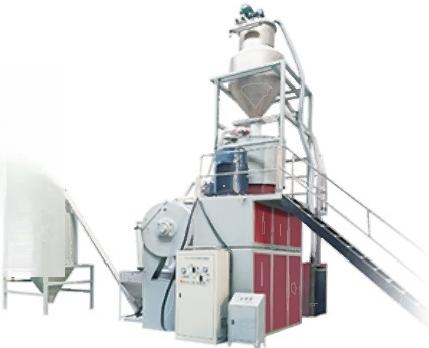
Recycled material deserves separate attention inside this route. Scrap, purging lumps and washed flake are irregular in size and bulk density, and they vary batch to batch in a way that virgin pellets do not. A strand line paired with the right upstream preparation — crusher, pulverizer, mixer — is the usual way to absorb that variation, and JKS lists the SP-series crusher and the SRL-Z high-speed mixing and cooling unit as part of its auxiliary range.
SJSZ55–SJSZ92: what the PVC hot-cut range is positioned to do
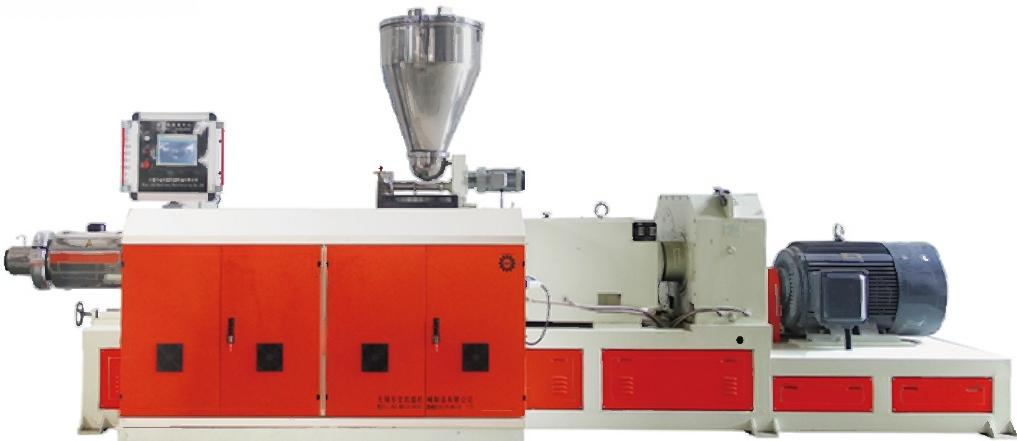
The PVC hot-cut pelletizing line is offered in four stated model sizes: SJSZ55, SJSZ65, SJSZ80 and SJSZ92. Its stated positioning is PVC pelletizing, and the SJSZ designation refers to the conical twin-screw extruder family that JKS also sells as a standalone machine. The route is a die-face one: the melt is cut at the die rather than formed into strands and cut after cooling.
Why the PVC route looks different comes down to the feed. Rigid PVC is normally prepared as a dry blend — a powder carrying resin, stabiliser, filler and processing aids — and a conical twin-screw extruder is the usual platform for handling that powder feed and building the melt under controlled conditions. PVC is also a heat-sensitive material, so a route that forms the pellet immediately at the die and cools it straight away removes the extra hot handling that a strand path implies. That is a process-route argument, not a claim about any single machine's output.
- Feedstock fit: PVC dry-blend and PVC pelletizing duties as positioned by the manufacturer.
- Cutting principle: die-face cutting, with pellets cooled immediately after formation.
- Platform: SJSZ conical twin-screw extruder family, also offered as a standalone machine.
- Model choice: SJSZ55 through SJSZ92 step up across the range; capacity and screw geometry must be confirmed per model.
Strand cutting vs. PVC hot-cut: the comparison that actually decides
Read the table by column, not by row. The shared row is the one buyers look at first, and it is the one that carries no decision value.
| Decision dimension | ST-series strand cutting line | PVC hot-cut pelletizing line |
|---|---|---|
| Stated model sizes | ST80, ST100, ST120, ST150 | SJSZ55, SJSZ65, SJSZ80, SJSZ92 |
| Stated application scope | Plastic compounding, masterbatch production, plastic waste recycling | PVC pelletizing |
| Screw and barrel | 38CrMoAlA nitrided alloy | 38CrMoAlA nitrided alloy |
| Where the pellet is formed | Strands leave the die, are cooled and dried, then cut | Cut at the die face, cooled immediately after |
| Usual feed form | Compounds, concentrates, regrind and washed flake | PVC dry blend and PVC pelletizing feedstock |
| Extruder platform | Strand cutting line as listed, paired with upstream preparation | SJSZ conical twin-screw extruder family |
| Layout consequence | Cooling bath, dewatering and drying stage required | Strand cooling and drying stage avoided |
| What settles the choice | The pellet is a compound, concentrate or recycled intermediate | The pellet is PVC, usually from a dry blend |
The table has one honest limitation: it compares documented positions and mechanisms, not measured side-by-side output on a single material. No test result comparing an ST model with an SJSZ model on the same feedstock is included in the available material, so no claim of superiority in either direction can be made from it. What the table does establish is the boundary line — material scope first, model size second.
Five steps from feedstock to a signed specification
Step 1 — Write the feedstock specification before you look at a model list. Record the polymer, the physical form (powder dry blend, pellets, flake, agglomerate), filler and additive loading, moisture condition and bulk density. This is the step that eliminates one of the two ranges. A PVC dry blend points to the SJSZ range; a filled compound, a masterbatch concentrate or a recycled flake stream points to the ST range. The available material does not state numeric acceptance limits for any of these inputs, so treat each value as an open item to be confirmed with the supplier rather than a threshold you can pre-qualify yourself.
Step 2 — Define the pellet you need to ship or feed. Pellet size, fines tolerance, packing method and whether the pellet goes to your own downstream extruder or to a customer all constrain the cutting and cooling arrangement. A pellet sold as a product and a pellet fed directly into the next line five metres away are not the same specification.
Step 3 — Choose the route, then stop comparing route-level features. Once the route is fixed, screw and barrel material, drive concept and frame construction are verification items, not selection criteria. This is where most comparison sheets go wrong: they keep evaluating shared attributes after the decision has already been made at the material step.
Step 4 — Size within the chosen range using model-specific data. Move from ST80 to ST100 to ST120 to ST150, or from SJSZ55 to SJSZ65 to SJSZ80 to SJSZ92, only on the basis of a data sheet that states output, the basis on which that output was measured, screw geometry, drive power, connected load, heating capacity and cooling capacity. The model number alone is a position in a range, not a capacity. Ask specifically which material and which operating condition the quoted output refers to.
Step 5 — Put acceptance into the purchase order. Specify the pre-shipment test, the material to be run during that test, the pellet sample you will approve, the spare-parts list, and the installation and training scope. JKS states that it provides personalised design, free factory installation, technical training and formulation service according to the client's raw material and production demand — those commitments should appear in the order documents, not only in the brochure.
What the supplier's comparison figures do and do not tell you
JKS's own comparison material for its pelletizing-related equipment states 10–15% higher processing capacity and 5% lower energy use, a similar initial cost to alternatives with a longer service life that reduces replacement frequency, a simple structure that is easy to clean and maintain, and readily available spare parts. It also states an energy-saving motor design and low power consumption.
Read the comparison scope carefully. Those figures are stated against generic auxiliary equipment and standard extruders from other suppliers — that is a supplier-level comparison, not a strand-versus-hot-cut comparison on the same material. The correct use of such a claim is as a prompt for questions: ask how the capacity figure was measured, on which material, at which pellet size, and whether the energy figure is per kilogram of pellet or per hour of operation. Do not carry the number across into a comparison between the ST and SJSZ ranges, because the available material does not support that reading.
Matching the pellet line to the downstream extrusion line
A pellet specification is only correct relative to the line that consumes it. JKS builds downstream lines across a wide product span — SPC flooring and PVC/WPC board sheet lines, PVC and HDPE pipe lines, PVC/WPC profile lines, solid plastic rod extruders and steel-wire reinforced composite pipe lines — and each of those processes feeds differently. A profile extruder with a narrow feed throat and a high-aspect screw has different tolerance for pellet size and fines than a large pipe line running a deep-flighted screw.
Two practical consequences follow. First, when the pellet line and the shaping line are bought in the same project, quote them together so that pellet geometry and downstream feed section are specified as one system. Second, when the pellet is sold externally, the specification should be written against the customer's process rather than against a generic pellet-size norm, because a pellet that runs perfectly in one plant can starve the feed zone in another.
For a compounding or recycling plant that also runs its own shaping lines, the ST strand line is the more natural pairing: compounding, masterbatch and recycled intermediates are exactly the duties it is positioned for, and the visible strand gives the operator a quality gate before the pellet reaches the downstream extruder. For a PVC processing plant that needs pellets from its own dry blend, the hot-cut route keeps the process inside the PVC workflow rather than adding a strand cooling and drying stage.
Risk control before shipment
Both routes carry the same categories of operational risk: equipment downtime, inconsistent product quality, material waste, electrical or mechanical failure, and delivery delay. JKS states that its machines use a PLC automatic control system with real-time monitoring, overload protection and an emergency stop function, and that units are tested before shipment. The stated company measures are strict quality inspection before delivery, standardised installation guidance, remote technical support, on-site troubleshooting and spare-parts supply.
Translate those statements into verification items you can check. Confirm the control architecture and which parameters are monitored in real time. Confirm that overload protection and the emergency stop are tested during the pre-shipment run, and ask for the record. Confirm the spare-parts list against the wear parts you expect to replace — for a pelletizing line that normally means the cutter assembly and the screw and barrel, and the readiness of those parts matters more than the purchase price of the line. Finally, confirm what happens after a stoppage: remote diagnosis and on-site support are only useful if the response route and the responsible contact are named in the contract.
Frequently asked questions
Do both pelletizing routes fall under the same machinery safety requirements?
Both are extrusion machines, and the scope of the relevant safety standard is written around the machine type rather than the cutting arrangement. ANSI/PLASTICS B151.7 is listed by the ANSI webstore as B151.7-2014 (R2021), applying to extrusion machines used in the plastics industry and requiring a documented risk assessment in the manufacture, care and use of the machinery; the PLASTICS Industry Association standards page lists the 2013 edition. Because those two published references do not agree on edition, confirm which edition your target market's requirement cites before you sign a compliance statement, and do not assume a strand line or a hot-cut line is exempt because of its pellet-forming method.
Can one line handle both PVC dry blend and PE/PP recycled material?
Not on the basis of the positioning stated for these two ranges. The ST-series strand cutting line is positioned for plastic compounding, masterbatch production and plastic waste recycling, while the hot-cut line is positioned for PVC pelletizing — two different material scopes, not two configurations of one machine. A single line quoted to run both would be a specific engineering proposal, and the available material does not describe such a dual-route configuration. If you need both duties, ask the supplier to state in writing whether one line or two is proposed, and on what basis.
How do we choose between ST80, ST100, ST120 and ST150, or between SJSZ55 and SJSZ92?
Only from a model-specific data sheet. The model lists confirm the sizes that exist in each range; they do not publish output, screw geometry or drive power per model. Request, for each candidate model, the rated output with the basis on which it was measured, the screw diameter and geometry, drive power, connected load, heating and cooling capacity, and the material condition used for the rating. Sizing on a model number alone is guesswork, and the difference between two adjacent models in the same range is exactly the kind of gap that is invisible without a data sheet.
Is strand cutting cheaper to run than hot-cut?
The available material does not support a route-level running-cost comparison between the two. The stated commercial comparison is supplier-level — similar initial cost to generic alternatives, with a longer service life reducing replacement frequency — and it does not measure strand cutting against hot-cut on the same material. Route-level cost is driven by things the two routes do differently: feed preparation and blending, cooling and drying, cutter wear, fines and rework, and spare-parts consumption. Build a cost model on those items for your own material and throughput, and ask the supplier to fill in the consumption figures rather than a headline percentage.
What should we send for a trial before ordering?
Send the feedstock in the form you will actually run, not a cleaned-up laboratory substitute. For the ST range that means the compound, concentrate or recycled material at its real filler loading and contamination level; for the SJSZ range that means the PVC dry blend with its actual formulation. Include the target pellet size and the downstream use. Ask for the trial to be run on the proposed model configuration and for pellet samples to be approved against a written specification, so that the approved sample becomes the acceptance reference in the purchase order.
What lead time should we plan for, and what should be in the order?
No lead time for these pelletizing ranges is stated in the available material, so treat it as an open item to be confirmed in writing rather than estimated. The order should name the exact model, the route and configuration, the feedstock specification, the acceptance test and the material it will be run on, the approved pellet sample, the spare-parts list including cutter assembly and screw and barrel, and the installation, training and formulation-service scope. Confirm shipping terms and the documentation package at the same time. If you want to review the wider equipment range before that conversation, the JKS WPC door project brochure is available for download, and a sample or quotation request can be sent to gordon@jksjx.com or +86 18651004566.
Conclusion
Strand cutting and PVC hot-cut pelletizing are two routes to the same output form, reached from opposite directions. The ST80–ST150 strand line is built around a compound, a masterbatch concentrate or a recycled intermediate that benefits from being formed, cooled and inspected as a strand before it is cut. The SJSZ55–SJSZ92 hot-cut line is built around PVC pelletizing, where die-face cutting keeps the pellet out of a separate cooling-and-drying path.
Because both ranges specify a 38CrMoAlA nitrided alloy screw and barrel, a comparison built on wear components will not separate them, and a comparison built on model numbers will not size them. The workable sequence is: define the feedstock, define the pellet's destination, choose the route, size within the route from model-specific data, and write acceptance into the order. Everything a buyer needs to start that sequence — the four ST sizes, the four SJSZ sizes, and the application scope of each range — is already in the model lists above. The remaining figures belong on a data sheet, signed by the supplier, in your project file.
Have Questions or Need More Details?
Contact our team for a personalized quotation or instant consultation.
Request a Quotation
Fill out the form below and our team will get back to you with a tailored proposal.
WhatsApp Direct Chat
Prefer to chat in real-time? Message us on WhatsApp for instant assistance & quick answers.
- Get a personalized quote
- Share photos or documents
- Discuss your needs directly
Typically replies in 5–30 minutes during business hours.