
What Is a Plastic Pelletizing Line? Strand Cutting vs Hot-Cut
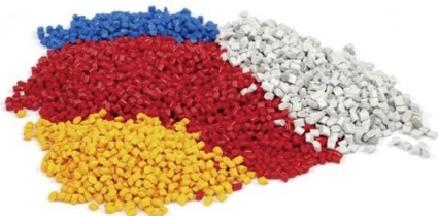
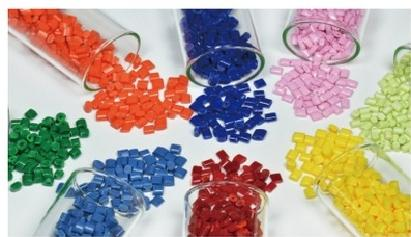
A plastic pelletizing line is a plastic extrusion machine that converts raw resin, compounded formulations, or recovered plastic waste into uniform pellets. Those pellets then feed downstream production — pipe extrusion, profile extrusion, sheet and board lines, and injection molding. Pelletizing is the step that turns uneven scrap or bulk resin into a consistent, reusable, and resellable material.
Two process routes dominate this category. Strand cutting pelletizing cools the melt into solid strands in a water bath before chopping them into pellets. Hot-cut pelletizing cuts the melt directly at the die face while it is still hot. This explainer defines the category, explains how each system works, and shows where each route fits. It is written for buyers entering the recycling and compounding market for the first time.
Problem Definition: Why Pelletizing Lines Confuse New Buyers
Most first-time buyers assume that any pelletizing line can process any plastic. In practice, the correct pelletizing route is decided by one factor above all others: the physical form of the material being fed in.
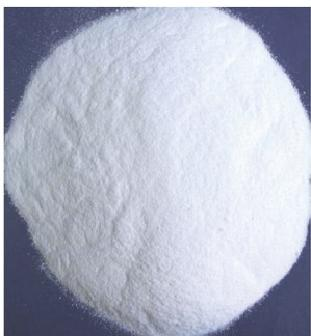
A compounder who has PVC powder in a silo faces a very different process from a recycler holding baled PE film, crushed PP pipes, or mixed post-industrial scrap. The material dictates the extruder, the die, and the cutting method. Choosing the wrong cutting route leads to uneven pellets, high fines, frequent downtime, or scrap that cannot be fed reliably at all.
A second source of confusion is naming. Terms such as granulator, pelletizer, strand cutter, and die-face cutter are used loosely across the market. For the purpose of this guide, a pelletizing line always combines three elements: an extruder that melts and plasticizes the material, a die that shapes the melt, and a cutting system that converts the melt into pellets.
Industry Background: Where Pelletizing Fits
Pelletizing sits at the front of a wide value chain. The global plastic extrusion machine market — the category that pelletizing lines belong to — was valued at approximately USD 7.9 billion in 2025 and is projected to grow to USD 12.87 billion by 2035 (Market Research Future). Demand is driven largely by compounding and by the growth of plastic recycling, because recovered material must be pelletized before it can be reused.
Supply is concentrated in a small number of manufacturing hubs. According to the Observatory of Economic Complexity, China was the leading exporter of rubber and plastic working machinery (HS 8477) in 2024 at USD 8.55 billion, ahead of Germany (USD 6.11 billion) and Italy (USD 2.61 billion). For a new buyer, that concentration is useful context: most pelletizing equipment is sourced from these regions, and comparing suppliers across them is a normal part of the research stage.
Within this landscape, Wuxi JKS Machinery Manufacturing Co., Ltd. is a Chinese manufacturer of custom plastic extrusion machinery and turnkey production lines. Founded in 2013, the company operates a 2,000 m² facility with a team of about 20 employees, a 6-engineer R&D team, and an annual output of roughly 200 units. Its product range covers sheet, SPC flooring, WPC foam board, pipe, profile, and rod extrusion lines together with waste plastic pelletizing lines.
Detailed Solution: The Two Main Pelletizing Systems
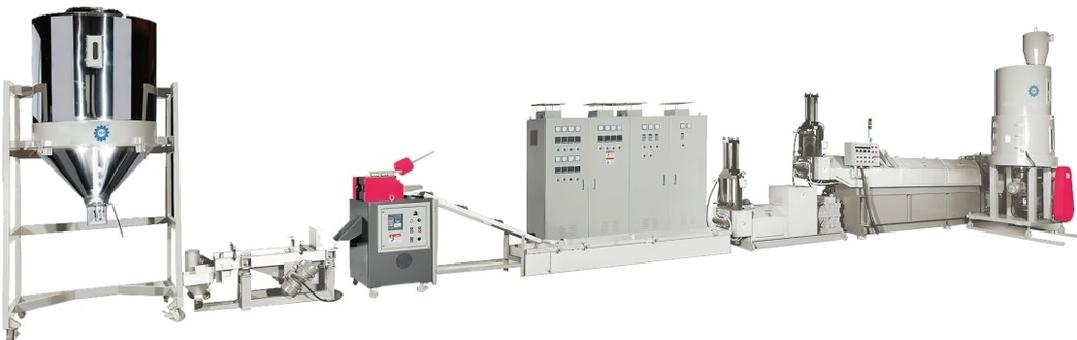
1. Strand Cutting Pelletizing Line (ST Series)
A strand cutting line extrudes the melt through a die into thin strands. The strands pass through a water cooling bath, solidify, and are then pulled into a cutter that chops them into short pellets. Because the strands are fully cooled before cutting, strand cutting is a stable and predictable route for materials that flow well and for mixed or recycled feedstock.
The ST series covers four models with an L/D ratio of 35:1, and capacity scales with the model:
- ST80 — 55 kW, 70–160 kg/h
- ST100 — 75 kW, 170–280 kg/h
- ST120 — 90 kW, 250–400 kg/h
- ST150 — 110 kW, 350–650 kg/h
The line is offered in two configurations: a single-stage water strand pelletizing line and a two-stage waste plastic recycling pelletizing line, where plasticizing and granulation are integrated. It processes raw materials including PE, PP, ABS, PS, HIPS, and PC, and is intended for plastic compounding, masterbatch production, and plastic waste recycling.
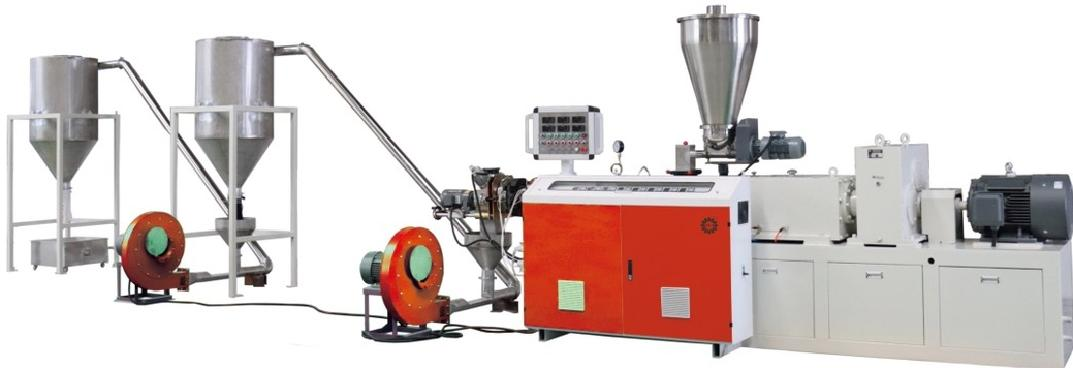
2. PVC Hot-Cut Pelletizing Line (SJSZ Series)
Hot-cut pelletizing takes a different approach: the molten plastic is cut directly at the die face, before it cools. A blade shears the hot melt into pellets as it exits the die, and the pellets are then cooled and graded. Because cutting happens at the die face, hot-cut systems suit materials that stiffen quickly or do not form clean strands — most notably PVC.
The PVC hot-cut pelletizing line is built around a conical twin-screw extruder and is available in four models:
- SJSZ55 — 22 kW, 100–150 kg/h
- SJSZ65 — 37 kW, 200–250 kg/h
- SJSZ80 — 55 kW, 350–400 kg/h
- SJSZ92 — 110 kW, 650–800 kg/h
Raw material is PVC powder or PVC scraps. Hot die-face cutting produces uniform pellets, and the line includes a cooling and grading system so that output leaves the line consistently sized. It is designed for PVC compounding, plastic scrap recycling, and masterbatch and PVC pellet production, and is suitable for both virgin compounding and waste plastic recycling.
Shared Build: Screws, Barrels, Dies, and Frames
Across both routes, the same component logic applies. Screws and barrels are made of 38CrMoAlA nitrided alloy steel. The pelletizing die is made of wear-resistant alloy steel, and machine frames are built from Q235 carbon steel. For a buyer, this matters because the screw and barrel are the parts that wear first under continuous operation: the material used here determines how long the line holds its output before maintenance.
Step-by-Step Breakdown: How a Pelletizing Line Runs
Although strand cutting and hot-cut differ at the cutting stage, the upstream sequence is similar. A typical pelletizing line works through the following stages:
- Material preparation. Raw resin, compounded formula, or recovered scrap is fed into the line. In many recycling setups this follows crushing and pulverizing so the feed is consistent in size and free of oversize pieces.
- Melting and plasticizing. The extruder melts and homogenizes the plastic. A single-screw extruder handles general thermoplastics such as PVC, PP, PE, Nylon, and ABS; a conical twin-screw extruder is used for direct PVC powder extrusion, with uniform plasticizing and mixing, low shearing, and stable output.
- Die shaping. The melt reaches the die, which forms either strands for a downstream cutter or a continuous hot face for direct cutting.
- Cutting. Strand cutting pulls cooled strands into a cutter after the water bath. Hot-cut shears the melt at the die face while it is still soft.
- Cooling and grading. Pellets are cooled and separated by size so the final product is uniform. Hot-cut lines use a dedicated cooling and grading system at this stage.
- Storage or packaging. Finished pellets are collected for reuse, compounding, or resale.
Use Cases: Where Each Route Fits
The choice between strand cutting and hot-cut usually becomes obvious once the material and the end use are clear.
Strand cutting fits:
- Plastic compounding and masterbatch production
- Recycling of PE, PP, ABS, PS, HIPS, and PC scrap
- Two-stage waste plastic recycling, where plasticizing and granulation are integrated in one line
- Operations that need a stable, easy-to-inspect pellet output
Hot-cut fits:
- PVC compounding and PVC pellet production
- Processing PVC powder or PVC scrap directly
- Materials that stiffen too quickly to form clean strands
- Masterbatch and PVC pellet output that requires uniform, graded pellets
Comparison Table: Strand Cutting vs Hot-Cut at a Glance
| Parameter | Strand Cutting Pelletizing Line (ST Series) | PVC Hot-Cut Pelletizing Line (SJSZ Series) |
|---|---|---|
| Cutting method | Strands cooled in a water bath, then cut | Hot die-face cutting at the die |
| Typical raw material | PE, PP, ABS, PS, HIPS, PC | PVC powder or PVC scraps |
| Models | ST80, ST100, ST120, ST150 | SJSZ55, SJSZ65, SJSZ80, SJSZ92 |
| Output range | 70–650 kg/h | 100–800 kg/h |
| Motor power range | 55–110 kW | 22–110 kW |
| Extruder configuration | Single-stage water strand or two-stage recycling | Conical twin-screw extruder |
| Cooling | Water cooling | Cooling and grading system |
| Screw & barrel material | 38CrMoAlA nitrided alloy steel | 38CrMoAlA nitrided alloy steel |
| Pelletizing die | Wear-resistant alloy steel | Wear-resistant alloy steel |
| Frame material | Q235 carbon steel | Q235 carbon steel |
| Main application | Compounding, masterbatch, plastic waste recycling | PVC compounding, PVC scrap recycling, PVC pellet production |
Frequently Asked Questions
Do plastic pelletizing lines have to meet a specific safety standard?
In the United States, ANSI/PLASTICS B151.7 sets safety requirements for extrusion machines used in the plastics industry and calls for a documented risk assessment process in the manufacture, care, and use of the machinery. Buyers should note that published listings do not always reference the same edition of the standard, so the current edition should be confirmed with the supplier before any compliance commitment is made.
Which materials can a strand cutting line process, and which suit hot-cut?
A strand cutting line is built for plastic compounding, masterbatch production, and plastic waste recycling, and processes raw materials including PE, PP, ABS, PS, HIPS, and PC. A PVC hot-cut line is built for PVC powder or PVC scraps and is intended for PVC compounding and recycling, suitable for both virgin compounding and waste plastic recycling.
How much output can each pelletizing line deliver?
On the strand cutting side, the ST series runs from ST80 at 55 kW and 70–160 kg/h up to ST150 at 110 kW and 350–650 kg/h. On the hot-cut side, the SJSZ series runs from SJSZ55 at 22 kW and 100–150 kg/h up to SJSZ92 at 110 kW and 650–800 kg/h. Matching the model to a realistic daily output target is the first sizing decision for any new line.
How can a new buyer start the evaluation process?
Begin with the material: confirm whether you are feeding PVC powder or scrap, or PE/PP/ABS/PS/HIPS/PC recyclate, and state your target output per hour or per day. Wuxi JKS Machinery designs custom pelletizing lines and provides a formulation service based on the client’s raw material and production demand. Sending material samples and output targets to the supplier is the standard next step before a line configuration and quote are prepared.
Conclusion: Match the Line to the Material, Not the Other Way Around
A plastic pelletizing line is best understood as the bridge between raw or recovered plastic and reusable feedstock. The category splits into two practical routes. Strand cutting lines — the ST series, from ST80 to ST150 — cool strands in water and cut them, and suit PE, PP, ABS, PS, HIPS, and PC compounding and recycling. Hot-cut lines — the SJSZ series, from SJSZ55 to SJSZ92 — cut PVC at the die face and suit PVC powder, PVC scrap, and PVC compounding.
For a buyer at the research stage, the decision rarely comes down to which route is objectively better. It comes down to which route fits the material in front of you. Confirm the feed form, confirm the target output, and confirm how the screw, barrel, and die are built — in both routes here, screws and barrels are 38CrMoAlA nitrided alloy steel, and dies are wear-resistant alloy steel. Those three checks will place a new buyer on the right route before any commercial discussion begins.
Ready to move from research to a real line?
Wuxi JKS Machinery builds custom strand cutting and PVC hot-cut pelletizing lines around your material and your output target, and provides a formulation service based on your raw material and production demand. Send your material details and target output to receive a matching line configuration and a quote.
Website: www.extrudetec.com
Email: gordon@jksjx.com
WhatsApp: +86 18601577228
You can also download the JKS product brochure (PDF) for line details.
Have Questions or Need More Details?
Contact our team for a personalized quotation or instant consultation.
Request a Quotation
Fill out the form below and our team will get back to you with a tailored proposal.
WhatsApp Direct Chat
Prefer to chat in real-time? Message us on WhatsApp for instant assistance & quick answers.
- Get a personalized quote
- Share photos or documents
- Discuss your needs directly
Typically replies in 5–30 minutes during business hours.