
From Product to Production Line: Matching Plastic Extrusion Machines to Real Projects

From Product to Production Line: Matching Plastic Extrusion Machines to Real Projects
The right plastic extrusion machine is not simply the most popular model. It is the line that fits the project: the end product, the raw material formula, the required output, and the site conditions. A pipe maker, an SPC flooring producer, and a recycling workshop may all search for “plastic extrusion machine,” but the machines they actually need are different.
Wuxi JKS Machinery Manufacturing Co. Ltd. is a Chinese manufacturer founded in 2013 and specialized in custom plastic extrusion machinery and complete turnkey production lines. The company designs plastic sheet, SPC flooring, WPC foam board, plastic pipe, PVC/WPC profile, solid rod, and waste plastic recycling pelletizing lines, as well as standalone single-screw and conical twin-screw extruders and auxiliary equipment. JKS reports that its extrusion machines have been exported to more than 35 countries.
Problem Definition: Why a Generic Machine Pick Fails
Many project teams start by comparing extruders alone, without defining the complete process chain. That approach creates avoidable problems:
- Wrong screw geometry. A conical twin-screw extruder is commonly used for direct PVC powder extrusion, especially with high-filled PVC formulations. A single-screw machine is more versatile for PP, PE, ABS, PA, POM, and other thermoplastic processing, but it does not replace the mixing and plasticizing behavior needed for every PVC project.
- Missing downstream equipment. An extruder is only one section of a line. Calibration tables, cooling tanks, haul-off units, cutting systems, calender rollers, and embossing units define the final product quality.
- Overlooking capacity and site limits. A line that is too large wastes capital; a line that is too small caps revenue. Power supply, factory length, and line footprint also need to be checked early.
- Ignoring compound preparation. PVC projects often require high-speed mixing and cooling before extrusion. Recycling projects may need crushers, pulverizers, and pelletizing units before material can be reused.
The goal is project-fit selection: start from the product specification and work backward to the extruder type, auxiliary equipment, and line layout.
Industry Background: Market Signals That Shape Project Choices
Market context: The global plastic extrusion machinery market was valued at about USD 8.93 billion in 2024 and is projected to reach USD 11.58 billion by 2030, according to Grand View Research. Asia Pacific held the largest regional share at 41.5% in 2024, with China as a major contributor.
Pipe production remains a large category. Dataintelo estimates the global pipe extrusion lines market at USD 4.8 billion in 2025, with PVC accounting for 38.6% of the material segment. In flooring, Grand View Research projects the Stone Plastic Composite flooring market to grow from USD 6.4 billion in 2026 to USD 10.3 billion by 2033, a 7.2% CAGR. Waste plastic washing and pelletizing recycling lines were valued at about USD 5.502 billion in 2024, according to QYResearch, which supports growing interest in recycling-based projects.
These market signals explain why project planning increasingly focuses on specialized lines: SPC flooring, PVC pipe, WPC profile, and recycling pelletizing each follow a different equipment logic.
Detailed Solution: JKS Full-Set Custom Plastic Extrusion Lines
JKS supplies full-set plastic extrusion production lines, not only the main extruder. The company operates a standardized production workshop and an independent R&D team, with an annual output of about 200 units. More than 50% of its products are exported, mainly to Southeast Asia, Russia, the Middle East, Europe, Central Asia, Africa, and South America.
The JKS product range can be grouped into four families:
Sheet and Board Extrusion Lines
- SPC flooring extrusion line: models SJSZ92/188, SJSZ110/220, SJP115/30, and SJP135/30. Finished product thickness is 1–10 mm, effective width is 980 mm or 1250 mm, and output is 15–40 tons per 24 hours depending on extruder model. Optional processes include EIR in-line synchronous wood-grain embossing and vertical or inclined four-roller calender structures.
- PVC imitation marble sheet extrusion line: available with SJSZ80/156 or SJSZ92/188. Sheet thickness is 1–12 mm, effective width is 1220 mm, and output is 400–700 kg/h depending on model.
- PP hollow construction formwork line: available with SJ-130×33 or SJ-90×33 extruders. The line produces 1220 mm wide, 15–20 mm thick hollow formwork with an ABA three-layer structure. Output is 500–600 kg/h for the SJ130 version and 180–250 kg/h for the SJ90 version, equivalent to about 420–480 panels per 24 hours. Overall machine dimensions are about 34 m × 7 m × 4.5 m, with a suggested power transformer of 315 KVA.
- PVC hollow wall panel and ceiling line: models SJSZ51, SJSZ55, SJSZ65, and SJSZ80. Finished board width ranges from 300 mm up to 1200 mm, with output from 120 kg/h to 400 kg/h.
Pipe Extrusion Lines
- PVC water supply and drainage pipe line: models PVC63, PVC250, and PVC630 cover pipe diameters from 16 mm to 630 mm. Production output is 270 kg/h, 450 kg/h, and 800 kg/h respectively, with vacuum calibration and multi-claw traction.
- HDPE water pipe line: models PE110, PE315, PE630, PE1000, and PE1600 cover pipe diameters from 20 mm to 1600 mm, with extrusion capacity up to 1500 kg/h.
- PPR pipe line: models PPR20-75 and PPR20-110 use GS65/33 or GS90/30 single-screw extruders, with extrusion capacity of 80–160 kg/h or 80–250 kg/h.
- Steel wire mesh reinforced composite pipe line: models GS/PE-160-H through GS/PE-630-H cover pipe diameters from 50 mm to 630 mm for pressurized water supply and industrial pipeline projects.
- Corrugated pipe line: models KSPG-63, KSPG-32, KSPG-20, KS-160, and KS-75 produce single-wall corrugated pipes from about 6 mm to 160 mm in diameter.
Profile, Door, and Rod Lines
- PVC and WPC door and window profile line: SJSZ92/188 produces hollow waterproof WPC door slabs up to 1200–1600 mm wide, while SJSZ65/132 produces WPC door jambs, casings, and decorative surrounds.
- WPC door panel line: available with SJSZ80 or SJSZ92, with output capacities of 250–400 kg/h or 400–600 kg/h.
- Multi-material plastic profile line: models SJ45, SJ50, and SJ65 process PP, PE, PVC, PS, PC, and ABS. With custom molds it can produce imitation marble profiles, ceiling panels, window and door profiles, sealing strips, edge bands, and PVC waterstops.
- Solid plastic rod line: models SJ45 and SJ65 process PP, PE, PA, and POM. The SJ45 produces rods from 6 mm to 60 mm; the SJ65 produces rods from 30 mm to 200 mm.
Recycling and Pelletizing Lines
- Plastic crusher: SP400 and SP660 crush plastic pipes, profiles, and sheets into small pieces, with capacities of 300–400 kg/h and 600–700 kg/h.
- Plastic pulverizer: MF400, MF500, and MF600 grind plastic scraps into 40–80 mesh powder, with capacities from 200 kg/h to 500 kg/h.
- PVC hot-cut pelletizing line: models SJSZ55, SJSZ65, SJSZ80, and SJSZ92 cut PVC directly at the die face, with outputs from 100–150 kg/h up to 650–800 kg/h.
- Strand cutting pelletizing line: models ST80, ST100, ST120, and ST150 process PE, PP, ABS, PS, HIPS, and PC, with capacities from 70 kg/h to 650 kg/h. Two-stage configurations are available for waste plastic recycling.
Step-by-Step Breakdown: How to Match a Line to a Project
Step 1: Define the End Product and Specification
Write down the finished product, dimensions, thickness, surface finish, and daily output target. For example, an SPC flooring project needs a line capable of 1–10 mm thickness and 980 mm or 1250 mm effective width. A PP construction formwork project needs 1220 mm width and 15–20 mm thickness.
Step 2: Select the Extruder Technology
PVC powder with high filler content is commonly processed with a conical twin-screw extruder, such as the SJSZ series. Materials like PP, PE, ABS, PA, and POM are often processed with single-screw extruders when the downstream application is a pipe, rod, profile, or pellet. Single-screw extrusion machines held a dominant market share of about 62.7% in 2024, according to Grand View Research, but the right choice depends on the material and product.
Step 3: Build the Complete Downstream Configuration
Profiles need calibration tables, cooling tanks, haul-off units, and cutting. Pipe lines need vacuum calibration, multi-claw traction, and cutting or belling equipment. Sheet and flooring lines need calender rollers, and SPC lines may include EIR in-line synchronous embossing. The downstream section determines dimensional accuracy and surface quality.
Step 4: Check Capacity, Power, and Factory Footprint
Capacity must match the business plan. Site conditions also matter. As an example, the PP hollow construction formwork line has overall dimensions of about 34 m × 7 m × 4.5 m and a suggested power transformer of 315 KVA. Power supply can be customized by JKS as part of the design service, including voltage and frequency changes.
Step 5: Plan Customization, Quality Control, and Commissioning
JKS supports OEM, ODM, and custom design. Extruder model, screw configuration, line layout, voltage and frequency, and control systems can be adjusted to the project. JKS has a monthly production capacity of about 30 units, a lead time of about 40 working days, and a minimum order quantity of one unit. Every line receives 100% factory pre-assembly and testing before shipment, and third-party inspection is available on request. After-sales support includes overseas installation guidance, on-site commissioning, operator training, remote technical support, and a 12-month warranty.
Use Cases: Different Projects, Different Line Configurations
SPC Flooring Producers in Malaysia and Korea
A manufacturer in Malaysia has operated one complete JKS SPC flooring extrusion line for over 10 years. The line continues to run in stable production with consistent product quality and low maintenance. A plastic flooring manufacturer in Korea has also operated a JKS SPC flooring extrusion line for over 8 years with stable 24/7 production and precise thickness control.
PVC Hollow Wall Panel Project in Vietnam
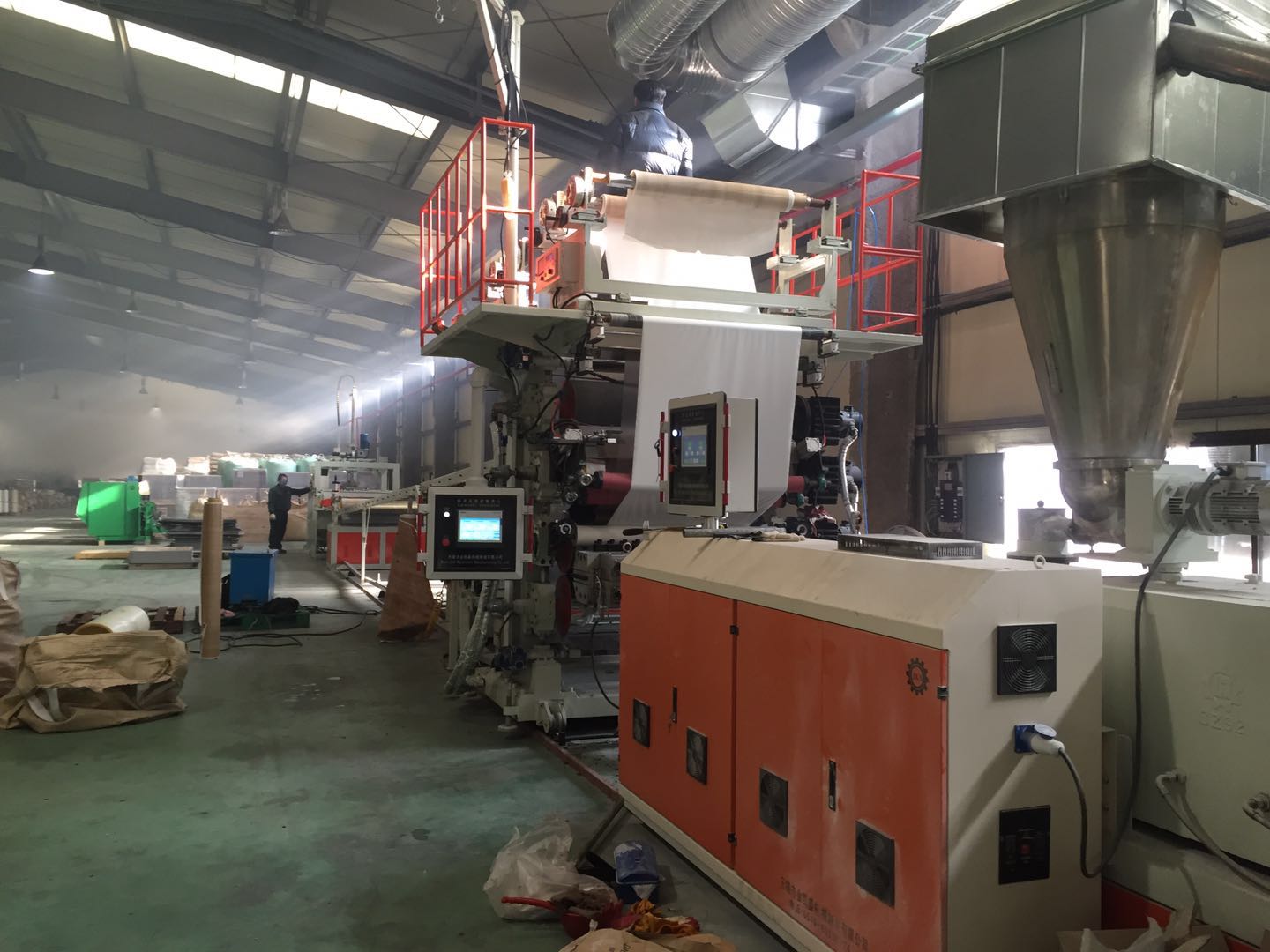
A plastic building materials manufacturer in Vietnam bought one complete PVC hollow wall panel extrusion line. The line has been in operation for more than five years and continues to run stably. The project used a complete turnkey solution with on-site installation support and full export documentation.
Pipe Projects for Water Supply and Drainage
For municipal water supply, farm irrigation, or building drainage, JKS pipe lines cover a wide range: PVC lines up to 630 mm diameter, HDPE lines up to 1600 mm, PPR lines for indoor hot and cold water plumbing, and steel wire mesh reinforced composite pipe lines for higher-pressure applications. Each pipe project needs a different die, calibration system, cooling section, and haul-off speed.
Recycling and Compounding Projects
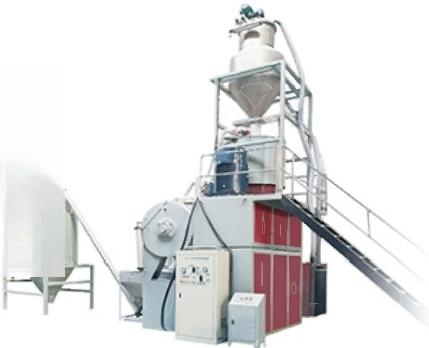
Recycling projects often combine a crusher or pulverizer, a mixing unit, and a pelletizing line. For example, a PVC compounding workshop can use an SRL-Z high-speed mixing and cooling unit, a conical twin-screw extruder, and a PVC hot-cut pelletizing line to convert PVC powder or scraps into uniform pellets. For PE, PP, ABS, or PC, a strand cutting pelletizing line is more common.
Comparison Table: Which Line Fits Which Project
| Project Focus | Recommended JKS Line | Key Production Data | Typical End Use |
|---|---|---|---|
| SPC flooring | SPC flooring extrusion line | 1–10 mm thick; 980/1250 mm wide; 15–40 tons/24h | Rigid SPC flooring for residential and commercial buildings |
| Decorative sheet | PVC imitation marble sheet line | 1–12 mm thick; 1220 mm wide; 400–700 kg/h | Interior wall and floor decorative panels |
| Construction formwork | PP hollow construction formwork line | 1220 mm wide; 15–20 mm thick; 420–480 panels/24h | Reusable building formwork |
| Wall and ceiling panels | PVC hollow wall panel and ceiling line | 300–1200 mm wide; 120–400 kg/h | Wall panels, ceiling boards, door and cabinet panels |
| Water pipe production | PVC, HDPE, PPR, reinforced composite pipe lines | Pipe diameter up to 1600 mm; output up to 1500 kg/h | Water supply, drainage, irrigation, plumbing |
| Doors and profiles | WPC door panel, PVC/WPC profile lines | Door slab width 1200–1600 mm; 150–600 kg/h | Interior doors, frames, decorative profiles |
| Engineering rods | Solid plastic rod line | Rod diameter 6–200 mm; output 5–60 kg/h | Machined mechanical parts, bushes, gears, insulation bars |
| Recycling and compounding | Crusher, pulverizer, mixing unit, pelletizing line | Crushing 300–700 kg/h; pulverizing 200–500 kg/h; pelletizing up to 800 kg/h | Waste plastic recovery, compounding, masterbatch production |
FAQ: Project-Fit Questions Buyers Ask
Do I need CE or ISO compliance for an extrusion line project?
For EU-bound equipment, and particularly for WPC door panel extrusion lines, CE marking is commonly required for market compliance, and ISO 9001 is widely used for quality management. For other regions, confirm the required documentation with the supplier before placing the order. JKS can arrange third-party inspection on request, and every line receives factory pre-assembly and testing before shipment.
Can one extrusion line produce multiple products?
Some lines are more flexible than others. The JKS multi-material plastic profile line can process PP, PE, PVC, PS, PC, and ABS, and with different molds it can produce decorative profiles, sealing strips, edge bands, and similar products. However, a line built for SPC flooring or pipe has a dedicated downstream configuration, so changing product type usually requires a new die, mold, or calibration package.
What factors affect the budget of a plastic extrusion project?
The main cost drivers are extruder model, screw and barrel specification, line length, mold or die design, downstream equipment, control system, and customization level. A higher-output SJSZ92 line will cost more than a smaller SJSZ55 line. Site power requirements also affect installation planning. JKS provides custom design according to raw material and production demand, so a project-specific quotation is the most reliable way to set a budget.
How can I check the machine before shipment?
JKS performs 100% factory pre-assembly and testing before shipment. Third-party inspection is available on request. Reference installations can also be reviewed; for example, JKS SPC flooring lines in Malaysia and Korea have operated for over 10 years and over 8 years respectively, and a PVC hollow wall panel line in Vietnam has operated for more than 5 years.
What is the lead time and after-sales support for a custom line?
JKS production capacity is about 30 units per month, with a lead time of about 40 working days and an MOQ of one unit. After-sales support includes overseas installation guidance, on-site commissioning, operator training, remote technical support, and a 12-month warranty. For a project-specific discussion, contact JKS with your product specification, target output, raw material, and site conditions.
Need help matching a line to your project?
Send your product specification, output target, and site conditions to JKS for a project-specific discussion.
Email: gordon@jksjx.com
Tel: +86 18651004566
WhatsApp: +86 18601577228
Have Questions or Need More Details?
Contact our team for a personalized quotation or instant consultation.
Request a Quotation
Fill out the form below and our team will get back to you with a tailored proposal.
WhatsApp Direct Chat
Prefer to chat in real-time? Message us on WhatsApp for instant assistance & quick answers.
- Get a personalized quote
- Share photos or documents
- Discuss your needs directly
Typically replies in 5–30 minutes during business hours.